

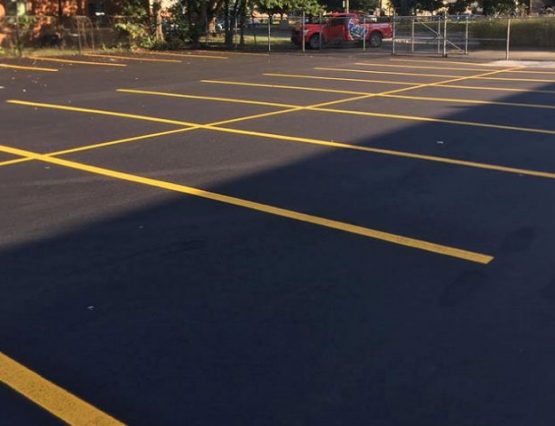
 If you manage a commercial property in Louisville, you’ve probably noticed how quickly asphalt can start to look tired.
Between Ohio Valley humidity, freeze-thaw cycles, and steady traffic from delivery trucks, parking lots along corridors like Dixie Highway or near industrial parks off I-64 age faster than owners expect. Sealcoating can be a smart move, but only when the timing and conditions are right.
Below, we walk through how to evaluate aging asphalt and decide if professional sealcoating is the right next step for your property.
Key Takeaways
- Sealcoating is most effective when applied to structurally sound asphalt showing early signs of aging.
- Louisville’s climate makes timing and surface preparation critical for long-term performance.
- A professional evaluation helps determine whether sealcoating or heavier repairs make financial sense.
- Coordinated maintenance planning reduces disruption and extends pavement life.
How to Evaluate the Condition and Timing for Sealcoating Aging Asphalt
Before committing budget dollars, it’s important to understand whether your asphalt is a good candidate right now. These checks help determine if sealcoating will extend service life or if other repairs should come first.
Review Surface Oxidation and Color Loss
One of the clearest signs of aging asphalt is a shift from deep black to dull gray. In Louisville’s summers, UV exposure accelerates oxidation, especially in open lots with no shade near retail centers or warehouses.
Oxidation dries out the binder that holds aggregate together, making the surface brittle. Sealcoating at this stage helps restore protection before cracking accelerates.
Inspect for Early-Stage Cracking
Hairline cracks, often called surface or block cracks, are common in parking lots near older office parks or strip centers built in the 1990s and early 2000s. These cracks usually form from temperature swings between winter freezes and humid summers.
If cracks are still narrow and haven’t interconnected, sealcoating combined with crack filling can slow water intrusion and prevent larger structural failures.
Check for Raveling and Aggregate Loss
Raveling shows up as loose stones or a rough, sandpaper-like texture. This is often seen in high-traffic drive lanes near loading docks or dumpster enclosures. In Jefferson County, frequent rain events can wash away fines once the surface starts to open up.
Light to moderate raveling is a signal that sealcoating may still be effective, while severe aggregate loss usually means resurfacing is closer.
Evaluate Drainage and Standing Water Patterns
Poor drainage shortens asphalt life. Walk the lot after a rain and note areas where water ponds, especially near catch basins or along curbs tied into MSD stormwater systems. Sealcoating can help protect sound asphalt, but it won’t fix underlying drainage problems.
If water stands for hours, those issues should be addressed first to avoid trapping moisture beneath a new sealcoat.
Consider Traffic Load and Usage Timing
Traffic type matters as much as age. Lots serving medical offices, apartment complexes, or logistics facilities near UPS Worldport experience heavier loads than small retail pads. Sealcoating is best scheduled during lower-traffic periods to allow proper curing.
In Louisville, late spring through early fall offers the temperature window needed for consistent results without disrupting tenants.
How to Determine Whether Professional Sealcoating Is the Right Next Step
Once you understand the condition of the asphalt, the next question is whether sealcoating alone aligns with your operational and financial goals.
Compare Sealcoating to Mill-and-Overlay Options
Sealcoating is preventive maintenance, not a structural fix. For properties where the asphalt base is still intact, sealcoating costs a fraction of a mill-and-overlay.
In the Louisville market, sealcoating is typically an estimated range of a few thousand dollars for mid-sized commercial lots, while overlays can run several times higher. If the pavement is stable, sealcoating often delivers a better short-term ROI.
Factor in Compliance and Curb Appeal Requirements
Commercial properties in areas like St. Matthews or downtown Louisville often have appearance standards set by tenants, HOAs, or municipal guidelines. Fresh sealcoating improves striping visibility and overall presentation, which can support leasing efforts and customer perception.
For properties subject to ADA considerations, clearer markings after sealcoating can also support compliance when paired with updated striping.
Assess the Need for Coordinated Repairs
Professional sealcoating works best as part of a system. Crack filling, minor patching, and oil-spot priming should be completed first. Properties with frequent fuel drips near drive-throughs or service bays need extra prep.
Coordinating these steps ensures the sealcoat bonds properly and performs as intended in Louisville’s variable weather.
Align Maintenance with Capital Planning Cycles
For commercial owners managing multiple assets across Jefferson County, timing matters. Sealcoating can extend asphalt life by several years, helping delay major capital expenditures.
If a full reconstruction is planned in the next year or two, sealcoating may not pencil out. If the goal is to stretch performance five years or more, it often does.
Weigh Operational Disruption and Scheduling
Professional crews plan sealcoating to minimize downtime. This includes phased work, off-hour scheduling, and coordination with property managers. In busy retail or industrial settings near Gene Snyder Freeway access points, keeping lanes open is critical.
Sealcoating typically requires shorter closures than major pavement work, making it easier to fit into active operations.
Take the Next Step Toward Smarter Pavement Maintenance
If your Louisville-area parking lot is showing signs of age but still has solid structure, sealcoating may be the most cost-effective way to protect it.
At PSI Paving, Inc., we help commercial property owners evaluate pavement conditions, plan realistic maintenance timelines, and execute work that fits operational needs.
Let’s review your lot, talk through options, and determine whether sealcoating now will save you money later. Call us to schedule a site walkthrough or request a detailed maintenance recommendation.
Frequently Asked Questions
How do we know if our parking lot is too far gone for sealcoating?
Surface condition, crack width, and base stability are the main indicators. Lots with widespread alligator cracking or base failure typically require rehabilitation beyond sealcoating. A professional evaluation includes visual inspection and probing to confirm whether the asphalt structure is still intact.
How long does professional sealcoating take for a commercial lot?
Most mid-sized commercial lots can be completed within one to two days, depending on prep work and weather. Cure times are influenced by temperature and humidity, which is why Louisville projects are usually scheduled during warmer, drier months.
What preparation is required before sealcoating begins?
Proper prep includes thorough cleaning, crack filling, patching failed areas, and treating oil spots. These steps are essential to ensure adhesion and are often coordinated to meet local operational constraints and access needs.
How often should commercial parking lots be sealcoated in this area?
In the Louisville region, sealcoating is typically recommended every two to three years for lots with moderate traffic. Frequency can vary based on usage, drainage, and exposure, which is why periodic inspections are part of responsible pavement management.


