

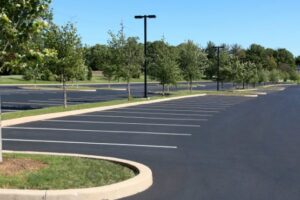
 Keeping your commercial parking lot well-marked isn’t just about looks. It’s about safety, compliance, and creating a great first impression for customers. In Louisville, KY, where busy commercial centers like Oxmoor Center, Bardstown Road, and Shelbyville Road see heavy daily traffic, proper line striping is essential.
Whether you manage a retail plaza in St. Matthews or an office complex near downtown, a well-planned striping project helps you stay compliant with local accessibility codes while keeping your lot functional and professional.
Key Takeaways
- A strong line striping plan in Louisville begins with checking your lot’s condition and fixing any damage first.
- Local rules and ADA standards guide how parking spaces, ramps, and signs should be placed for safety.
- Good timing, reliable materials, and careful scheduling help avoid delays and keep striping work smooth and efficient.
- Clean surfaces, sealcoating, and regular maintenance keep Louisville parking lots bright, safe, and looking professional year after year.
Assess Your Lot’s Current Condition
Before any paint is laid down, the first step is assessing the current state of your parking lot.
In Louisville, the mix of weather—from freezing winters to humid summers—can cause asphalt surfaces to fade, crack, or peel. We often see lots in the Highlands or Jeffersontown areas with faded ADA markings or worn directional arrows that confuse drivers.
Taking time to document existing issues, including oil stains or surface cracks, helps you know what needs repair before painting begins. This step ensures your striping lasts longer and looks cleaner once complete.
Verify Local Regulations and ADA Compliance
Louisville parking lots must comply with both Kentucky state codes and federal ADA requirements. This includes ensuring proper placement and size of accessible parking spaces, ramps, and signage.
For instance, the Louisville Metro Planning and Design Services Department enforces local standards for commercial properties, and noncompliance can result in costly rework or fines.
Checking these details early guarantees that your striping layout meets all legal and accessibility expectations.
Design an Efficient Parking Layout
An effective layout maximizes space while maintaining traffic flow and safety. For lots in high-traffic areas like the Hurstbourne corridor, efficiency is key—angled parking might improve flow compared to straight stalls, depending on your lot’s size and shape.
We often help businesses in Middletown and Lyndon redesign their layouts to improve entry and exit visibility, especially where multiple businesses share a lot.
A well-thought-out design balances convenience with compliance.
Schedule Around Business Hours and Weather
Louisville’s unpredictable climate plays a big role in scheduling line striping.
Because striping requires dry surfaces and moderate temperatures, late spring through early fall tends to be ideal. For retail centers near Mall St. Matthews or office parks in East Louisville, planning work during off-hours—often overnight or on weekends—prevents disruptions to customers and employees.
A clear timeline helps ensure minimal downtime and consistent quality results.
Choose Durable Materials and Markings
Selecting the right materials makes all the difference for long-term performance.
In Louisville, we often recommend thermoplastic markings or high-quality traffic paints designed to handle frequent temperature changes and vehicle traffic. Lots exposed to heavy use—such as near UPS Worldport or the University of Louisville campus—benefit from reflective, long-lasting paint that maintains visibility even under heavy wear.
Choosing the right materials early ensures your investment holds up over time.
Make Sure Long-Term Results and Smooth Project Execution
Once you’ve planned your striping layout, the next step is making sure the work holds up through Louisville’s demanding weather and daily traffic. Here’s how to keep your parking lot looking sharp, compliant, and professional year after year:
Proper Surface Preparation Before Painting
A clean, dry surface is key for long-lasting striping results. Louisville’s roads and lots often accumulate dust, pollen, and grime—especially during spring and summer.
Pressure washing and repairing cracks before painting helps the new lines adhere properly and look crisp. In areas with heavy tree cover, such as Cherokee Triangle or Crescent Hill, cleaning away debris and sap buildup is essential before any striping begins.
Coordinating with Property Management and Tenants
Communication makes or breaks a successful project. When working on mixed-use spaces like those along Dixie Highway or Brownsboro Road, coordination with tenants ensures everyone knows when certain areas will be closed off.
Providing a clear striping schedule, temporary signage, and quick-dry materials helps minimize disruptions. A smooth communication plan keeps everyone informed and the project on track.
Using Professional Equipment and Techniques
Professional-grade striping machines provide precision and consistency that DIY methods can’t match. In Louisville’s commercial zones, where lots see a high turnover of vehicles daily, straight, even lines are essential for a professional look. Our experts use laser-guided equipment and high-output sprayers that deliver clean, uniform markings.
This precision ensures compliance and a polished finish that enhances curb appeal.
Applying a Protective Sealcoat After Striping
Sealcoating acts as a barrier against moisture, oil, and UV damage—common culprits in Louisville’s changing seasons. Applying a sealcoat after striping locks in the paint and protects both the asphalt and markings.
For lots near the Ohio River, where humidity can accelerate wear, this extra step dramatically extends the life of your investment. It also keeps your lot looking sharp year-round, even after snow, rain, and road salt exposure.
Scheduling Routine Maintenance and Re-Striping
Line striping doesn’t last forever, especially with Louisville’s freeze-thaw cycles.
Setting a maintenance schedule—typically every 18–24 months—keeps your markings visible and compliant. We often remind our clients in Prospect, Shively, and Fern Creek to schedule inspections in early spring to address winter damage.
Regular touch-ups prevent fading and ensure your parking lot always makes a strong first impression.
Keep Your Parking Lot Looking Professional and Compliant
At PSI Paving, Inc., we combine expert layout design, durable materials, and precision application to deliver professional striping results built for Kentucky weather. Our team works around your schedule to minimize disruption and ensure ADA compliance from start to finish.
Ready to refresh your parking lot?
Contact us today to schedule your line striping consultation and keep your Louisville property looking clean, safe, and professional all year long.
Frequently Asked Questions
How long does a typical line striping project take for a commercial parking lot in Louisville?
Most commercial line striping projects in Louisville take one to two days to complete. We schedule work around your business hours and weather conditions to ensure minimal disruption and smooth, efficient project completion.
Can old striping or markings be removed before applying new ones?
Yes, we can remove old striping using surface grinding or high-pressure washing. This step ensures better paint adhesion, cleaner lines, and a more professional appearance for your commercial property in Louisville.
Do you offer specialty markings or custom layouts for specific businesses?
We provide specialty markings such as loading zones, fire lanes, crosswalks, and custom stencils for businesses like warehouses, retail centers, and hospitals throughout Louisville, ensuring safety and clear traffic direction.
How soon can vehicles safely use the parking lot after painting?
Most striping paints dry in about an hour, depending on the weather and the materials used. We recommend keeping vehicles off the lot for several hours to protect the fresh markings and finish.


