

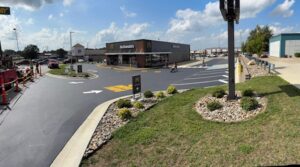
 As a commercial property owner in Louisville, there’s a good chance you’ve had to deal with asphalt paving at some point—whether for a parking lot, access road, or loading dock area. But even after years in business, many owners are still surprised by what goes into a long-lasting, regulation-compliant paving project.
Asphalt work isn’t just about laying down blacktop and calling it a day.
It’s about drainage, city codes, weather patterns, and long-term maintenance.
Based on what we’ve seen, here are five things most business owners don’t realize about commercial asphalt paving in Louisville, KY.
Key Takeaways
- Most Louisville lots break down early because drainage, weather, and sub-base conditions are often overlooked during paving.
- Local codes and ADA rules require site plans, striping, and signage for legal and safe parking lot use.
- Each paving project needs custom planning based on location, soil, traffic, zoning, and crew coordination in Louisville.
- Regular maintenance and the right asphalt mix keep commercial lots in good shape through Louisville’s freeze-thaw winters.
1. Drainage Problems in Louisville Parking Lots Are More Common Than You Think
Many business owners overlook drainage entirely—until their parking lot starts pooling water after a heavy summer storm. With the humid subtropical climate and flash rainstorms common between May and September, standing water is one of the fastest ways to break down asphalt. In older areas like Germantown or Clifton, where infrastructure can be decades old, poor drainage can cause asphalt to crack prematurely or even erode the sub-base.
A properly graded lot with well-planned catch basins or trench drains isn’t optional.
It’s a must in Louisville.
2. Louisville Metro Code Has Strict Paving Regulations You Can’t Afford to Miss
If you’re paving a new lot or repaving an existing one, you can’t just wing it and hope for the best. Louisville Metro Government requires commercial properties to meet specific zoning and stormwater management codes under the Land Development Code.
We’ve seen several projects delayed or redone because a business owner didn’t realize they needed to submit a site plan or get approval from the Louisville Metro Planning & Design Services. These requirements are especially strict for properties along major corridors like Shelbyville Road or Dixie Highway. Skipping this step can cost you both time and money.
3. Recycled Asphalt Can Be a Smart Option—But Not for Every Property
Some business owners ask about using recycled asphalt (RAP) to save on costs. It’s a great material in many cases, especially for large, low-traffic areas like service lanes or back-of-house operations common in Louisville’s industrial zones.
But it’s not always a fit.
For example, if you operate near high-end retail areas like NuLu or along Frankfort Avenue, aesthetics and surface durability may be more important.
In those cases, we usually recommend a fresh hot mix that will perform better and present a more polished look.
4. Louisville’s Freeze-Thaw Cycles Are Tougher on Asphalt Than Many Expect
You might not associate Kentucky with harsh winters, but the freeze-thaw pattern here wreaks havoc on pavement. When temperatures drop below freezing and then climb back up—something that happens regularly in January and February—moisture in the asphalt expands and contracts. This leads to cracks, potholes, and surface deterioration, especially in areas with poor sub-base preparation.
In neighborhoods like Hikes Point or Valley Station, where older lots weren’t built to modern specs, this problem is even more common. Planning for Louisville’s specific winter stress is key to a longer-lasting surface.
5. Striping and Signage Are Part of Compliance—Not Just Finishing Touches
Some business owners are surprised to learn that line striping, ADA compliance, and signage aren’t optional extras. They’re required by law.
In Louisville, parking lots must meet federal ADA guidelines and often local fire lane or loading zone requirements as well. Whether you’re operating near the University of Louisville campus or out near Middletown, you’ll need to ensure that accessible spaces, curb ramps, and markings are installed correctly and repainted regularly.
Missing these elements can put you at risk of fines or legal issues.
What to Do If You’re Planning Commercial Paving in Louisville
If you’re considering new asphalt paving or resurfacing in Louisville, it pays to have a plan. Here’s how to get started the right way.
Start by Checking Your Zoning and Drainage Requirements
Before you even request a quote, you need to understand the zoning and drainage requirements for your site. Properties in areas like Portland or Butchertown often fall under specific overlay districts that affect what materials or designs can be used.
You’ll also want to check the Metropolitan Sewer District (MSD) rules, especially if your project could affect runoff into local waterways like Beargrass Creek.
Schedule a Professional Site Assessment
A site visit from a local paving contractor isn’t just about taking measurements. At PSI Paving, Inc., we assess slope, soil conditions, traffic patterns, and access points.
In parts of Louisville where the soil can be heavy with clay—like in the South End—we often recommend more robust base prep to prevent heaving. Getting this assessment early can help avoid major headaches later.
Choose the Right Asphalt Mix for Your Specific Use Case
Not all asphalt is created equal. We tailor our mix selection based on your location and usage. For example, commercial lots near Bowman Field that get frequent delivery trucks need a stronger binder and thicker base than an office parking lot in Crescent Hill.
Picking the right materials from the start improves both performance and life expectancy.
Coordinate With Other Contractors and Service Providers
If your paving job overlaps with electrical, plumbing, or landscaping work, schedule carefully. We’ve worked on projects near Louisville International Airport and downtown, where coordinating multiple crews saved weeks on the timeline.
Don’t wait until the asphalt is poured to realize a trench needs to be cut.
Plan for Ongoing Maintenance and Future Repairs
Every good paving project in Louisville should include a plan for maintenance.
From annual sealcoating to regular crack filling, building this into your budget keeps your lot safe and presentable. We often recommend proactive maintenance for businesses along Preston Highway and in busy retail centers like St. Matthews, where heavy traffic and sun exposure speed up wear and tear.
Keep Your Lot Safe, Functional, and Compliant
At PSI Paving, Inc., we help Louisville business owners get the job done right the first time. Whether you’re resurfacing a busy shopping center lot in Fern Creek or paving a new warehouse access road in Shively, we know how to build pavement that lasts and meets all city and ADA requirements.
Ready to get started?
Let’s talk about your project, walk the site, and build a plan that works for your timeline and budget. Call us today to schedule a free estimate or site evaluation.
Frequently Asked Questions
How long does commercial asphalt paving usually take in Louisville?
Most commercial paving jobs in Louisville take two to four days, depending on the lot size, layout, and site preparation needs.
Can you pave over an existing asphalt lot instead of removing it?
Yes, we can install an asphalt overlay if the base is solid, but full removal is better for long-term performance.
What time of year is best for asphalt paving in Louisville?
Late spring through early fall works best because temperatures stay warm enough for proper asphalt bonding, curing, and surface compaction.
Do you handle signage and striping after the asphalt is installed?
Yes, we provide complete post-paving services, including ADA striping, traffic markings, and signage installation for compliance and functionality.


